
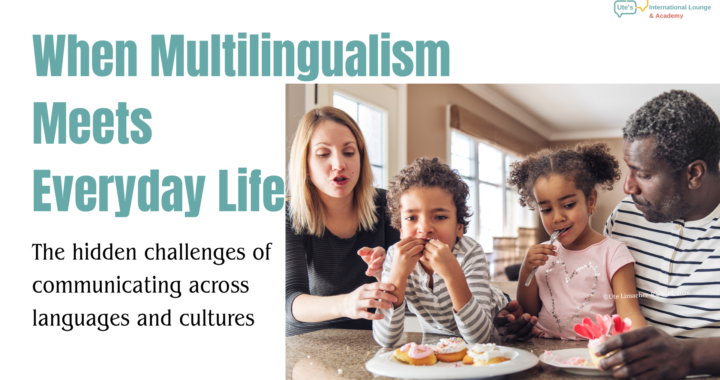
I often write and speak about multilingualism, and much of my work has focused on language development, language learning and how people navigate their languages. But there is another part of multilingual life that is less visible that happens in everyday interactions: in the conversations around the dinner table. in how parents respond to a […]
Continue readingCategory Archives: Multilingual Families

Beyond the Accent – Heritage language speakers are not failed monolinguals
Who Gets to Count as a Heritage Speaker? One of the most troubling aspects of current discussions around heritage language speakers is how narrow and exclusionary some definitions have become. In some contexts, children who begin actively acquiring a heritage language after the age of five are excluded from being considered “real” heritage speakers. In […]
Continue reading
Who is a Heritage Language Speaker?
Heritage language speakers occupy a unique and often misunderstood position within multilingual societies. In many parts of the world, millions of children grow up hearing one language at home while becoming educated and socially integrated through another. These individuals are frequently described as “heritage language speakers.” Yet despite the term’s widespread use, there is no […]
Continue reading
The Voice and the Self: How Accent Shapes Who We Are
After exploring how accents are perceived, evaluated and adapted, a final question remains: Why does all of this feel so personal? Accent is not just pronunciation. It is your linguistic biography. Among all features of language, accent may be the most intimate. Vocabulary can be learned from textbooks, grammar can be practiced and […]
Continue reading
The Chameleon Effect in Speech: How Voices Adapt to Belong
Have you ever noticed that you sound different depending on who you’re talking to? When certain ways of speaking are consistently valued more than others, speakers rarely remain unaffected. Instead, many begin to adjust to their social environment. A person may pronounce certain words differently at home than at work. A student may sound one […]
Continue reading