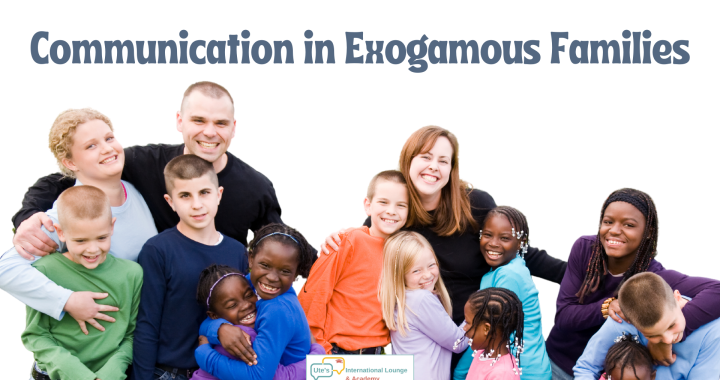
Every international family is unique. There are many different kinds of international families. Some partners come from the same country or share the same language and citizenship, others are from different countries, ethnicities and speak different languages.
In exogamous multilingual families, partners come from different cultural and linguistic backgrounds and experience unique dynamics in communication.
The diversity they bring to the experience can be enriching for their family as it exposes their children to multiple perspectives, languages, ways to do and understand things, traditions and beliefs. However, differences in communication styles between people from various cultures and language backgrounds can also lead to misunderstandings and tension.
When we understand how cultural values and beliefs shape communication, we can create a harmonious and effective environment for our family and friends.
In this post I highlight some important aspects that help optimise the communication in exogamous families, and share some tips (and activities) to encourage exploring and embracing cultural and linguistic diversity.
High-Context vs. Low-Context Communication
International families all have different communication styles. Since Edward T. Hall (1976), interculturalists distinguish between cultures as either high-context or low-context, and focus particularly on interactions.
- High-context cultures (e.g., Japanese, Arabic, Italian) heavily rely on non-verbal cues, shared traditions, and indirect language to convey meaning. Communication is based on shared understanding and the emhasis is put o relationships and explicit words. For example, in a high-context culture a parent might say, “it’s late,” assuming that it is understood that it is time to go to bed without any further explanation being necessary.
- Low-context cultures (e.g., German, Dutch, Danish) value directness and explicitness. Communication is clear, straight to the point, and focused. In the same situation, a parent from a low-context culture would say, “It’s 8:30, time to brush your teeth and go to bed.” This kind of wording doesn't give place to further interpretation.
In exogamous families, one partner might expect nuanced understanding without needing to explain more in detail, whilst the other may feel frustrated by a lack of clarity and details. During a discussion about parenting approaches, a high-context partner might feel that their shared cues are being ignored, while a low-context partner might feel overwhelmed by what they perceive as vague communication.
Practical Tips for Bridging Cultural Differences
1) Acknowledge the different Stypes and Learn About them
It is crucial to discuss the different communication styles used in the family. Everyone will have their preferences and can discuss their expectations with regards to how and when to say things, when communicating in an exogamous family.
- Example: Someone from a high-context culture can explain how gestures or tone of voice convey meaning, while a person fro a low-context culture might value detailed verbal explanations for clarity.
Family Activity:
In a "communication map" each parent can share typical phrases or habits from their culture, eg. how to greet each other, proverbs, sayings etc.
It can be very interesting to discuss what they mean, when they are used, how they are similar or different from phrases and habits from other cultures you know. This activity makes us aware of how styles can differ and what is needed to understand each other’s styles.
2) Creating a Family Communication Style
Instead of choosing one style over another it is advisable to blend them in a unique and effective way. Combine some parts of the high- and some parts from the low-context communication styles in a way that both sides feel understood. A shared family style will minimize misunderstandings and promote mutual acceptance.
- Example: If one partner prefers indirect requests, such as “It would be nice to have lunch together,” the family could agree on a middle-ground phrasing like, “Would you like to have lunch together at 13:00?” It is a compromise where everyone’s communication needs are met.
Family Activity:
Helping children recognize the different styles when using the various languages, fosters their metalinguistic and metacultural sensitivity. For instance, we can explain that a grandparent from a high-context culture will most likely expect them to understand unspoken rules during a visit, an aunt from a low-context culture might require clear, direct answers. This way we raise our children's awareness to adjust their communication style to the different cultural and linguistic situations they will be living in.
3) Multilingualism is a Resource
Languages reflect cultural values and can help us express ourselves better in specific situations. When we encourage the use of different languages to navigate emotions, we also reinforce cultural identity and clarify meanings.
- Example: As parents we use our most dominant language to comfort our children. The language we are most dominant in usually carries emotional nuances that feel more spontaneous and natural. Some parents prefer using their language rather for task-oriented communication, like when helping with homework.
4) Modelling Cultural Awareness for Children
Parents in exogamous families should demonstrate how to respect and navigate cultural differences. In order to do so they need to be aware of these differences, accept them and find a healthy way to use them to strengthen their relationship. When modelling cultural awareness and understanding, parents equip their children with effective intercultural communication skills.
- Example: When disagreeing on how to celebrate a tradition, parents can discuss about it openly with their children and, together, find a compromise that honors both cultures and meets both parent's needs.
Benefits of Understanding Cultural Values
When exogamous multilingual families actively engage with each other’s cultural values, they build deeper emotional connections and mutual understanding.
It is an effort that can lead to a unique intercultural family identity, where languages and cultures with their traditions and beliefs, and communication styles coexist in a harmonious way.
- Example: In a family where one parent comes from a high-context culture (e.g., China) and the other from a low-context culture (e.g., Denmark) may create a blend where storytelling, symbolism, and detailed instructions are used across different settings, such as bedtime routines, family meals, or problem-solving.
Over time, children learn to navigate different communication styles, a skill that enhances their empathy and adaptability in multicultural environments. It is just like code-switching when using different languages in different sessions and with different people.
Final Thoughts
Navigating cultural differences in communication requires a lot of effort. But it also offers the opportunity to gain a greater understanding and is an important skill to navigate international settings effortlessly.
Members of exogamous multilingual families have the unique opportunity to bridge cultural and linguistic divides and fostering mutual understanding. When we learn to embrace each other’s communication styles, we can create a nurturing family environment where diversity is celebrated and misunderstandings are minimized.
Is your family an exogamous one?
What are the communication styles in your family?
Bibliographical References
- Hall, E. T. (1976). Beyond Culture. Anchor Books.
- Ting-Toomey, S. (1999). Communicating Across Cultures. Guilford Press.
I help multilingual families foster effective and harmonious communication. Find my services about effective communication in multilingual families here.
Start with downloading your free copy of my
10 Tips for Effective Communication in Multilingual Families