
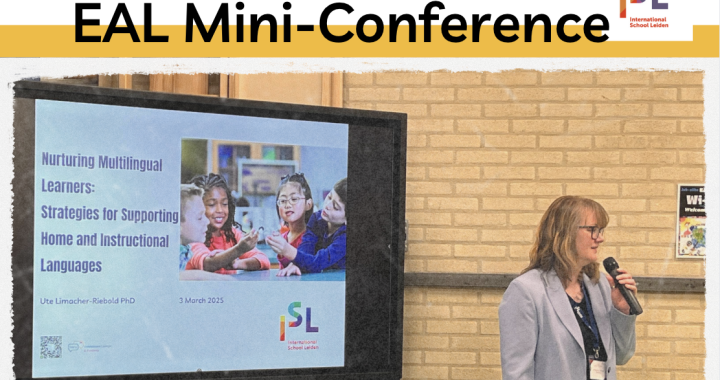
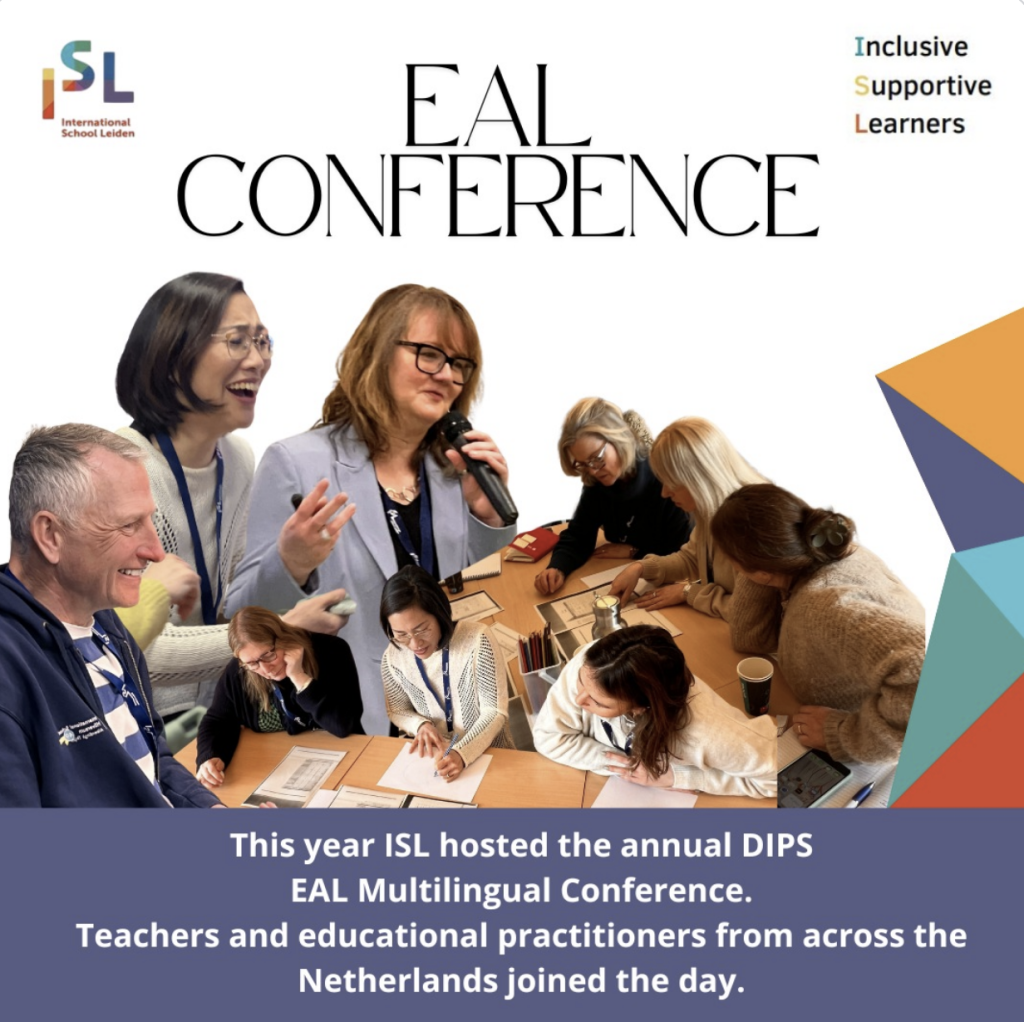
A few days ago, I had the honor of delivering the keynote speech at the annual DIPS EAL Conference on ‘Multilingual Education: The Cornerstone of Intergenerational Learning’, hosted by the International School Leiden in the Netherlands. This inspiring event brought together EAL experts from schools across the country to network, exchange experiences, and discuss strategies to make English accessible to learners with diverse linguistic experiences and backgrounds.
While the terminology was not the focus of the conference, it is important to clarify the common terms used in this context.
Schools that offer instruction in English, whether in an English-speaking countries or abroad, often use terms like EAL (English as Additional Learner), ESL (English as Second Language), EFL (English as a Foreign Language), and ESOL (English for Speakers of Other Languages). These terms help distinguish between learners who are new to English and those who have been exposed to it as a primary medium of communication from an early age. Personally, I avoid terms like "native speaker", as the can oversimplify and mislead the linguistic experiences of individuals.
Growing up in a multilingual environment, where children from various linguistic and cultural backgrounds learned together using the same language, I rarely encountered such distinctions. Language was a tool for learning and connecting, and the focus was less on the hierarchy of languages or language learners, and more on mutual understanding.
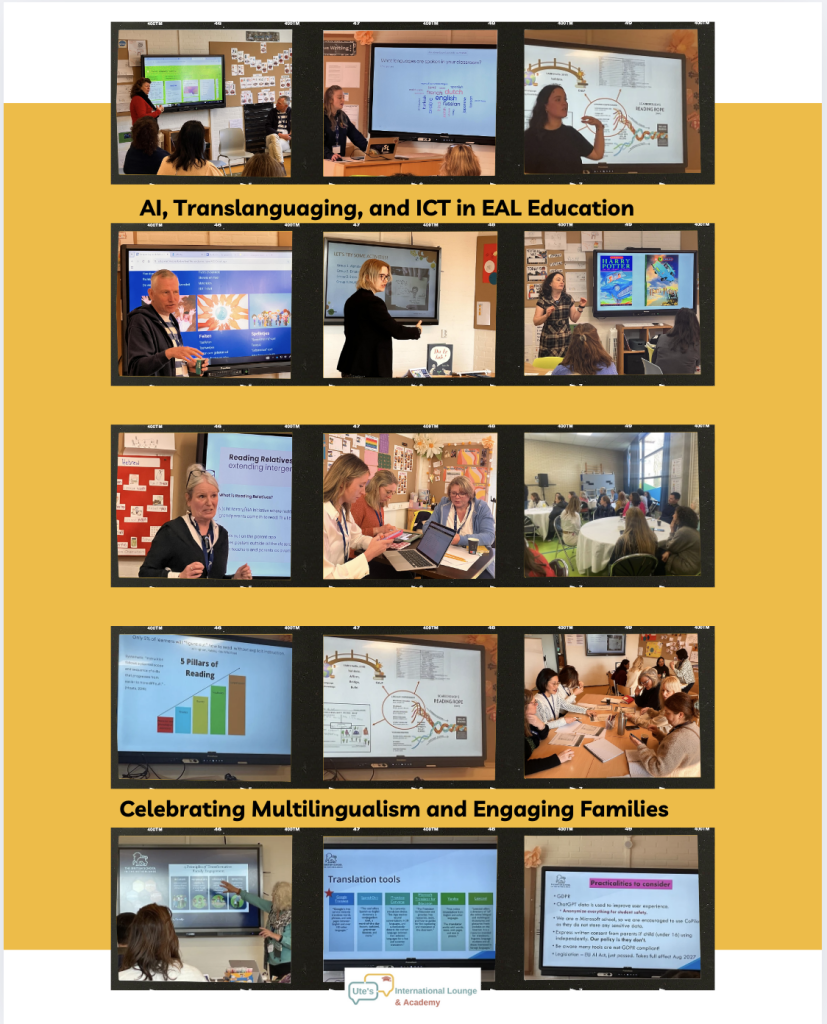
At the conference, I had the privilege of attending remarkable workshops, led by inspiring EAL teachers who shared their insights on integrating AI tools to support both teachers and pupils, and even parents, in a constructive way, covering also topics such as online safety and practical AI tools for newcomers, and best practices in multilingual classrooms. These discussions underscored the vital role of parents in fostering a language-friendly school environment. While teachers do not need to know all the languages their pupils use, effective collaboration with families is key to creating inclusive educational spaces.
Highlights from My Keynote
In my keynote, I highlighted the diversity of multilingual learners, drawing on foundational research by Uriel Weinreich (1953) and other linguists. While most studies in this field focus on successive multilinguals , less attention is given to simultaneous multilinguals or those who begin daycare in an additional language before developing verbal skills in their home language.
One widely adopted approach in multilingual education is translanguaging, which encourages pupils to leverage their full linguistic repertoire, including home languages, to complete assignments and support the overall learning process. This practice fosters inclusivity and helps pupils feel valued and seen. However, it can also present challenges for teachers aiming to guide pupils back to the instructional language.
Additionally, some learners, particularly coordinate multilinguals (Weinreich, 1953), may prefer to keep their languages compartmentalized, aligning with the principles of Content and Language Integrated Learning (CLIL).
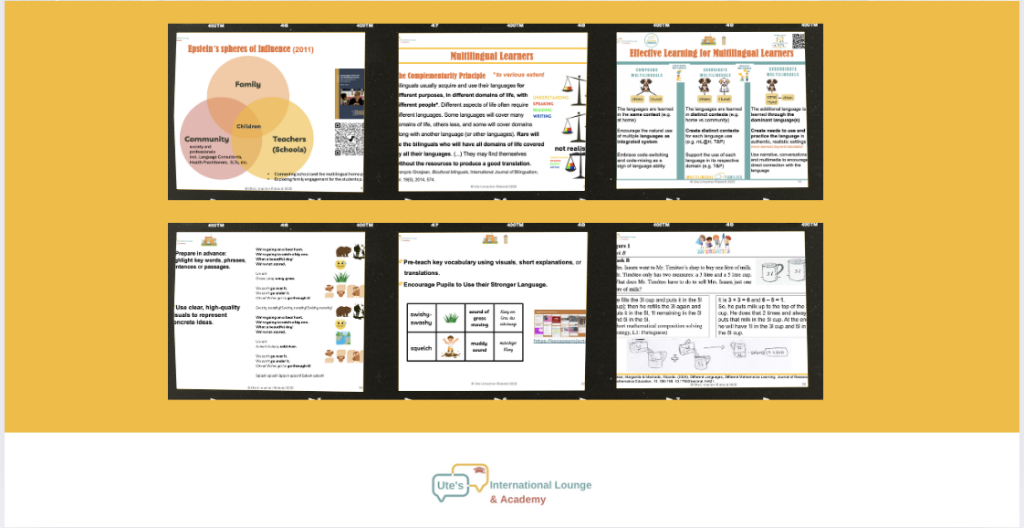
The practice of easification as mentioned by Joanna Kolota (2024) consists in modifying instructional materials and classroom practices to make learning more accessible without oversimplifying content, and allows pupils with various levels of proficiency to work on the same text. Another critical consideration is asynchronous literacy (Little, 2021), where multilingual students develop literacy skills in their additional language while lagging behind in their home languages when these are not fostered enough (by exposure, educational support, and community engagement). This phenomenon highlights the importance of tailored support for diverse multilingual learners, that should not be following a deficit-kind-of-approach!
A Multilingual Classroom Approach
Reflecting on my own experience at the European School in Varese, Italy, I witnessed how multilingual pupils navigate their education. In our German section, we learned subjects like history and geography in French (or English), our third language – and for some of my classmates, the fourth of fifth language. Some of my classmates used two or three languages at home, and the school language was not always one of them.
Teachers used visuals, synonyms, paraphrased complex content when necessary. They differentiated instruction to support all learners, emphasizing that we were all learners, regardless of our linguistic backgrounds. This inclusive approach is something I continue to advocate for today.
I attended a CLIL school – the European School in Varese, Italy – in a German section, learned History and Geography (and IT) in French, my chronologically speaking third language. Some of my classmates used two, others three languages at home, the school language not always being one of them. I saw how they learned, how they completed the tasks at school, whether this be by counting in their home language or by focusing on the school language. The teachers used the same material for all learners and added information in form of visuals when necessary. These visuals helped everyone, no matter if "native speaker" or not, because we were all learners, and that is what I prefer to focus on: we are all learners, no matter if we use the instructional language at home or not, no matter if we are children or adults, parents or teachers.
The EAL Mini-Conference featured several insightful workshops:
- A Beginner's Guide to Using AI to Scaffold EAL/ELA Learners – (Marianne Daniels, Gezina Gillen, Megan O'Reilly, Jason Percival; EAL Team at the Vlaskamp Junior School Campus of the British School in the Netherlands)
- Opportunities for celebrating multilingualism in your school – (Charles Claxton; International School Hilversum)
- Using all languages for learning – (Zohra Beldman; Optimist International School Hoofddorp)
- Enhancing Translanguaging Practices with AI (Monique Wewetje; International School Leiden)
- Empowering EAL Learners Through ICT: Practical Tools and Strategies (Cara Howe; HSV)
- Parents and staff a valuable resource to support cultural and linguistic inclusion (Deborah Perrin, Kuldeep Matharu; British School in the Netherlands)
- AI a Helping hand: A differentiated approach to literacy instruction within primary school (Emma Smit (International School Leiden)
- Plurilingual Parental Partnerships (Helen Absalom; International School Utrecht)
- Supporting parents to prepare their children for the multilingual environment (Hadis Tamleh)
Looking Ahead
The global network of EAL/ESL/EFL teachers has grown significantly over the past decade, fostering collaboration and innovation in multilingual education. This conference was a testament to the importance of shared expertise and the collective commitment to supporting multilingual learners in highly multilingual classrooms. As we look forward, it is essential that EAL/ESL/EFL etc. teachers continue to learn from other types of additional language learners, such as those learning German, French and other languages as "additional language". Strategies and insights from these diverse contexts can inform and enrich EAL practices, providing a more holistic understanding of language learning in multilingual environments.
Moreover, multilingual learners are not a homogeneous group. They may be simultaneous or successive multilinguals, compound, coordinate or suboardinate ones, and they change over time as they improve their various language skills. Some face challenges in literacy across their languages, with asynchronous literacy development being a common feature. By understanding the unique needs of these learners – whether they are new arrivals or children raised in multilingual households – teachers can better tailor their strategies to foster academic success.
Integrating perspectives from CLIL frameworks can further enhance teaching approaches (Jessner, 2006; Hufeisen, 2018). CLIL encourages the use of the instructional language for content learning, and this model can help EAL teachers create more engaging, effective environments where language and content are seamlessly integrated.
The exchange of ideas across these different fields of multilingual education will undoubtedly continue to shape the future of inclusive teaching practices, making it crucial for educators to remain adaptable, collaborative, and open to new methodologies.
There are many associations for EAL/ESL/EFL teachers around the world and it is amazing how this network has grown in the past 10(ish) years!
Some further readings on EAL strategies and multilingual education:
- Pedagogical Translanguaging by Jasone Cenoz and Durk Gorter (2021)
This open-access book explores the integratin of translanguaging practices in educational settings, offering insights into how leveraging students' entire linguistic repertoires can enhance learning outcomes.
- Minority Language as Second Language: Challenges and Achievements edited by Jasone Cenoz and Durk Gorter (2023)
This volume addresses the complexities of teaching minority languages as second languages, discussing both the challenges faced and the successes achieved in various educational contexts.
- Learning and Teaching Multiple Languages by Britta Hufeisen and Ulrike Jessner (2009)
This book provides an overview of theories and practices related to learning and teaching multiple languages, with practical insights for educators working in multilingual classrooms. It discusses the importance of cross-linguistic influence and metalinguistic awareness in the context of multilingual education.
- The Multilingual Turn in Foreign Language Education: Opportunities and Challenges by Britta Hufeisen (2018)
This work emphasizes the importance of multilingual pedagogy and explores how multilingual learners benefit from instructional approaches that leverage their existing linguistic repertoires.
- Linguistic Awareness in Multilinguals: English as a Third Language by Ulrike Jessner (2006)
In this book, Jessner explores the development of linguistic awareness among multilingual individuals, with a focus on learning English as a third language. She discusses how metalinguistic awareness can influence langauge learning processes and outcomes.
- Focus and Content-Based Language Teaching by Patsy M. Lightbrowm (2014)
Lightbrown provides a comprehensive overview of content-based language teaching, discussing its theoretical foundations, benefits, challenges, and practical applications in the classroom.
- Content-Based Language Teaching with Functional Grammar in Elementary School by Mary J. Scheppegrell (2016)
Scheppegrell explores the integration of functional grammar into content-based language teaching, highlighting strategies to enhance language development alongside subject matter learning in elementary education.
- Rethinking the Education of Multilingual Learners: A Critical Analysis of Theoretical Concepts by Jim Cummins (2021)
In this book, Cummins critically examines prevailing theories in multilingual education, addressing critiques and exploring their practical applications in classrooms. He also evaluates different perspectives on translanguaging, offering clarity on this complex concept.
- Languages in Contact: Findings and Problems by Uriel Weinreich (1953)
This foundational book explores the dynamics of languages in contact, addressing linguistic interference and code-switching. It provides the theoretical basis for understanding multilingual communication and remains essential for multilingualism research. Although Weinreich's original studies date back several decades, his frameworks on language contact, interference, and bi/multilingualism inform modern discussions on translanguaging, multilingual classroom strategies and language acquisition.
- Asynchronous Literacy and Multilingual Education by Sabine Little (2021)
Little's research delves into the concept of asynchronous literacy development among multilingual children, highlighting the complexities they face when acquiring literacy skills across multiple languages. The phenomenon refers to the uneven progression of reading and writing abilities in each language a child is exposed to, influenced by various factors such as language exposure, educational support, and community engagement.
- Empowering EAL Learners in Secondary Schools: A Practical Resource to Support the Language Development of Multilingual Learners by Joanna Kolota (2024)
Kolota introduces the concept of Easification, a practice of modifying instructional materials and classroom practices to make learning more accessible without oversimplifying content. It goes beyond traditional scaffolding by preserving the cognitive and linguistic complexity of tasks while adapting their presentation. For multilingual learners, this approach ensures that challenges are appropriate to their language proficiency an cognitive development, fostering deeper engagement and learning.
You can find more information about my trainings and webinars for teachers working with multilinguals here.

Pingback: Lectures and Workshops - Ute's International Lounge