
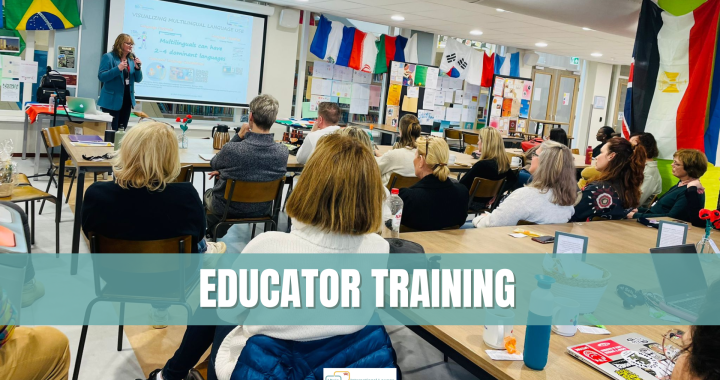
Supporting educators in understanding and responding to multilingual learners
Working with multilingual children is deeply rewarding, but it also comes with unique challenges.
Classrooms and schools often include children with diverse linguistic and cultural backgrounds, varying literacy levels, and distinct learning histories. Effective support emerges not from standardized methods, but from understanding how children use and develop their languages, and how their families’ linguistic and cultural contexts shape learning.
Multilingual learners follow diverse pathways: some acquire multiple languages simultaneously from birth, others successively, and still others navigate languages in coordinate, compound, or subordinate constellations. Recognizing these patterns is crucial for interpreting children’s language use, fostering inclusion, and collaborating meaningfully with families.
My trainings and webinars invite educators to reflect on these dynamics, explore practical examples, and gain conceptual tools that support confident, informed decision-making in classrooms and schools. The aim is not to provide a rigid set of strategies, but to help participants interpret what they observe, respond thoughtfully, and create inclusive learning environments.
Who this is for
These sessions are designed for:
-
Teachers, educators, and early childhood professionals working with multilingual learners
-
Schools, daycares, or educational organizations seeking reflective professional development
-
Teams wanting to strengthen communication and collaboration with parents and families from diverse backgrounds
What we explore
Instead of prescribing fixed solutions, we focus on questions such as:
-
How do children’s multilingual pathways shape their classroom participation and learning?
-
How can literacy across languages be understood and supported over time?
-
Which inclusive practices, such as translanguaging, best respond to observed patterns rather than following a formula?
-
How do cultural norms, expectations, and family communication styles influence learning?
-
What approaches foster trust, engagement, and collaboration with families?
The emphasis is on reflection, understanding, and practical insight, rather than rigid methods.
How the trainings work
-
Tailored to participants: Content adapts to the context, questions, and experiences of the educators or teams.
-
Interactive learning: Exercises, case studies, and reflective discussions invite participants to explore their own classrooms and student interactions.
-
Conceptual tools: Instead of prescriptive scripts, participants leave with frameworks and questions to guide interpretation and decision-making.
-
Research-informed perspective: Insights draw on current findings in multilingual education, literacy, and intercultural communication.
What participants often gain
-
Greater clarity on the linguistic and cultural dynamics in their classrooms
-
Confidence in interpreting multilingual learners’ behaviors and needs
-
Tools to foster inclusion without rigid instructions
-
Improved collaboration and communication with families
-
Awareness of cultural diversity and its impact on learning
-
A reflective framework for ongoing professional growth
Formats & Pricing
- 2-hour training / webinar (minimum 10 participants): €500
A concise introduction to multilingual and intercultural dynamics with reflective exercises and orienting tools for immediate application. - 4-hour training / webinar (minimum 10 participants): €1,050
An interactive session combining theory, reflection, and case-based discussion to support confident interpretation and inclusive classroom practices. - 3-day group training: €2,580
An immersive program for schools or professional teams seeking deeper, sustainable development in multilingual and intercultural practice. Includes tailored materials, interactive exercises, and follow-up recommendations.
Travel costs excluded.
