

When adults learn a new language they often opt for conventional language classes, i.e. learn the grammar and follow a textbook. If they need to attain a certain level quickly (cfr. A1-C2 of the Common European Framework of Reference for Languages or CEFRL), they follow intensive courses where they immerse into the language for […]
Continue readingCategory Archives: Bilingualism

Keep cool and stay bilingual
We can find many suggestions about how to support our children to become bilinguals* when they are toddlers, in preschool or primary school. But what happens when they are teenagers and young adults? Can we still support them with their family languages or other languages they’re learning along the way? If culture was a […]
Continue reading
The bilingual brain
This is a very interesting TEDx Talk about the “benefits of a bilingual brain” by Mia Nacamulli. – I only would like to point out that grown ups usually learn a new language in a very “conventional” way, which is rule-based (i.e. using books, learning grammar first), what leads to using one side of the […]
Continue reading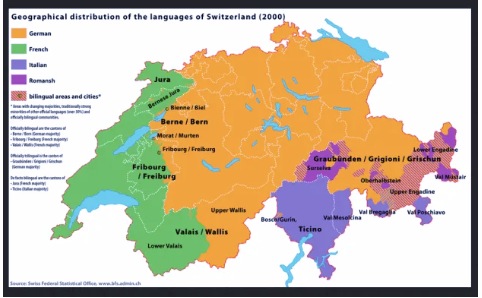
Multilingual Switzerland
I’ve often been asked if I was able to talk Swiss, as I’ve lived there for a long time. Even if this kind of comment seems funny to those who live in or close to Switzerland, it is quite a common assumption among people coming from other continents, that Swiss talk Swiss, like Swedish […]
Continue reading
Some thoughts about fluency in language
What does it mean to be “fluent” in a language? What is fluency? There are many different definitions of fluency, so for example it can be “the property of a person or of a system that delivers information quickly and with expertise”, or “the smoothness or flow with which sounds, syllables, words and phrases are […]
Continue reading