
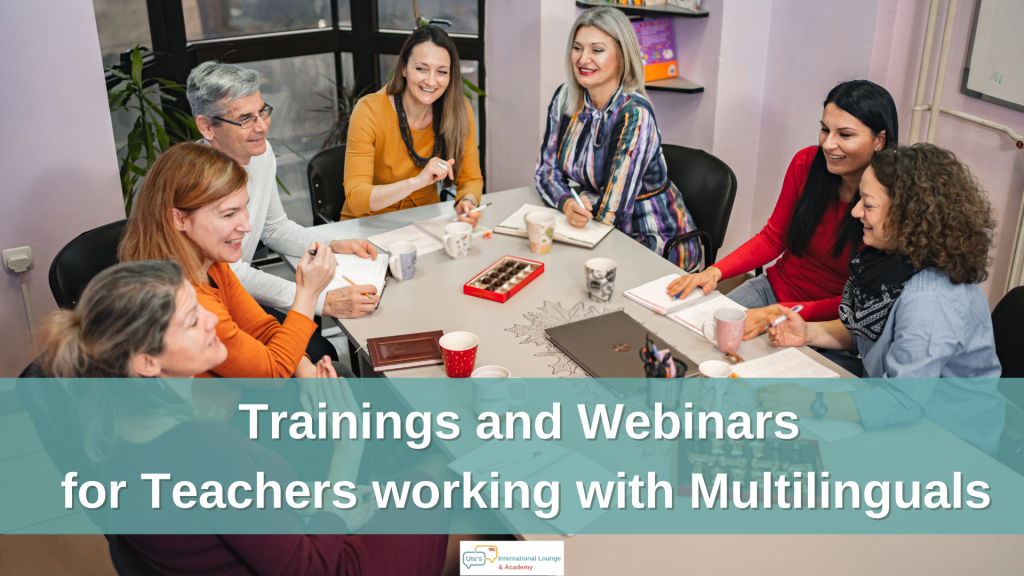
In my Trainings and Webinars for Teachers and Professionals working with Multilinguals I focus either on the work with children (1) or on the communication with their parents in early childhood education (2)
1) Working with multilingual children
- Are you a daycare or school with families with diverse linguistic and cultural backgrounds?
- Are you looking for a training for your teachers and staff members to help the them with their communication in a multilingual group or classroom?
- Would you like to know how to best support the children's bi-/multiliteracy at your daycare / school?
- Would you like to know how to best support your teachers' use of translanguaging practices within the school and class settings in an effective way?
- Would you like to learn strategies and best practices – based on recent findings – about how to foster home languages at school without compromising the learning of the school language(s)?
To reject the child's language in school is to reject the child (Jim Cummins 2001)
♦ Acknowledging and using the pupils' culture and language in an effective way in a multilingual and multicultural classroom, is key in keeping them engaged and invested in their schooling.
♦ Using translanguaging methods in school helps newcomers use their full linguistic repertoire, enhances their flexibility throughout the curriculum and maximises their learning potential, engagement and language development!
Especially for international families, schools are like a "second home".
2) Intercultural Communication with parents in early childhood education
Working with international children and families brings incredible richness to early childhood classrooms – but also unique communication challenges.
Teachers often face the following challenges when communicating with parents with diverse cultural and linguistic background:
- Language barriers: Simple conversations can become complex when language is used differently.
- Different communication styles: Direct vs. indirect, expressive vs. reserved – it all affects how thoughts are formulated and messages are sent and received.
- Cultural misunderstandings: Eye contact, silence or a parent's reluctance to speak up may be misread.
- Assumptions about roles: Some families expect teachers to lead without question, while others prefer open dialogue.
Even tone, gestures, facial expressions or silence can carry very different meanings across cultures – and without awareness, communication can easily break down.
The key: Cultural awareness, patience, and practical tools.
In my trainings and webinars you:
♦ Learn about cultural norms & values
♦ Understand the parents' expectations
♦ Learn strategies for effective communication
♦ Know how to build trust
If you’re navigating these challenges in your work, you're not alone
– and you don't have to figure it out by trial and error.
I help you build skills that truly support connection and inclusion.
♦ 3 days training for a group of educators, policy makers, teachers and researchers from Iceland (MML) from 23-25 May 2023 at Ute's International Lounge
♦ 3 hour workshop for educators at the Annual DIPS Conference at ESH (European School The Hague)
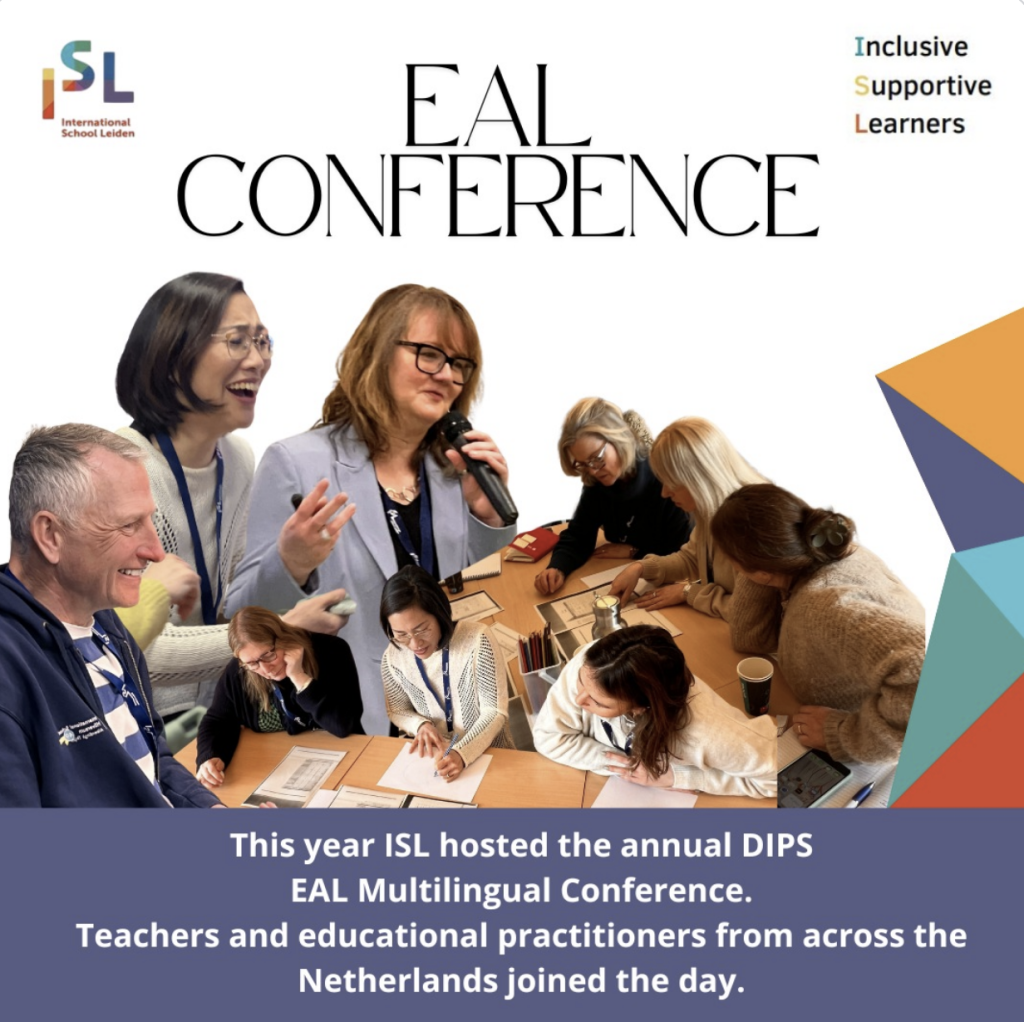 ♦ Keynote Speech at the annual DIPS EAL Conference on ‘Multilingual Education: The Cornerstone of Intergenerational Learning’ for educators from across the Netherlands at ISL (International School Leiden) on the 3rd March 2025
TESTIMONIALS
I found this very useful and gave me a lot to think about. Many of the subjects are things we are dealing with in Iceland for example concerning the obligations of parents, the evaluation of children whom are bilingual and have perhaps learning disabilities and etc. I think through out our conversation we need to do much better in Iceland concerning language policy, the co-operation with parents and far most the emphasis on what is suitable time for children to be in ,,welcoming class".
– Dagbjort A.
Very good training, most of which will affect my work and focus. It has confirmed that what I do is likely to help and support multilingual children and their families.
– Sigrún Baldursd
My expectations about the training were met in a very positive way. We had lectures/training which included long discussions about raising multilingual children both as parents and members of school staff. We also got a fantastic training and tips from Ute on how to be successful as consultants for multilingual families and schools. Ute recommended further reading and articles as she has a great overview of the issues regarding muItilingualism. I personally improved my knowledge and practical skills for my job and my head is full of new ideas and possibilities. I highly recommend Ute´s training.
– Ragnheiður Valgerður
Great training! High academic level but practical at the same time. My main takeaway is professional empowerment since Ute's approach resonated with our work. Ute also gave us some really good directions in regards to literature and strategies for reaching key stake holders. My next action is reading, "digesting" the literature and then devising a plan.
– Helga A.
Our training was exceptionally well-organized and adequately accommodated to our team's focal points. We simply wished to have more time to discuss further but this was probably the main take away, to invite Ute to Iceland and organize more training sessions on more efficient strategies for our work as consultants.
– Kriselle Lou Suson Jonsdottir
Thank you for a very well organized and interesting two day training. As you know it triggered much conversations among our group while we were trying to explain the situation to you but also trying to grasp your information with the aim of applying it.
– Thora S. U.
I liked you training very much. It was great to see your point of view and your experience.
– Oksana Shabatura
_______________________________________________
Goedemorgen Ute,
Ik wil je nogmaals bedanken voor de prettige & informatieve manier waarop je gistermiddag jouw kennis en ervaring hebt gedeeld.
Het is fijn om te zien dat je mijn collega’s positief hebt geïnspireerd en richting hebt kunnen geven in hun advies aan ouders die te maken hebben met meertalig opvoeden.
Ik krijg veel positieve reacties!
M. B.
Medewerker Wijkcontacten en Netwerken
Locaties Leidschenveen en Ypenburg
_______________________________________________
Dear Ute,
Thank you again for your intervention, it was really interesting and full of food for thought! I’m looking forward to attend the second one!
Thanks for the slides, they’ll be useful to go deeper into this amazing subject!
Lucilla Levrero (APLIL – Parent's association at an international school in London)
