
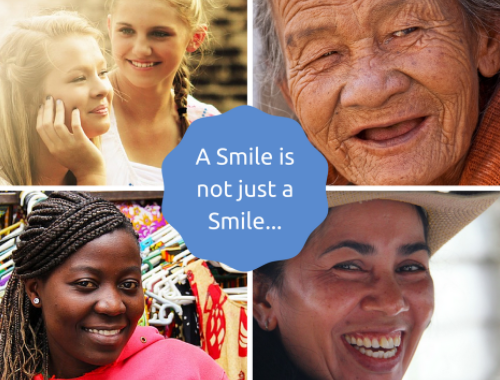
Our cultural identity helps us to create a sense of belonging, security, satisfaction and makes us feel connected. We all exist on different levels: we may identify with our nation, an ethnic group, a geographic region, social status, faith in a religious belief or ideology etc. Although we all have different types of identities – we can describe ourselves as active, timid/shy, outgoing, hardworking, team oriented etc. : all terms that describe our personality and help to define our personal identities. We all have more than one personal identity (and it has nothing to do with schizophrenia!) depending on the situation, the person we interact with, the language we use etc.
Then there is our social identity that is determined by the roles we take in family, school, groups, at work etc. We are mother/father, colleague, teacher, manager, hairdresser, artist etc. And our social identity includes being a member of a club or society – a group of persons who share the same interests. Cultural identity, on the other hand, implies “a shared sense of community and apparent similarities that generate both shared and common patterns, as well as social markers (…)
And these help give participants a sense of belonging, a sense of security or satisfaction, and some continuing connectivity.” (cfr. Steve J. Kulich, Shanghai International Studies University (SISU), Intercultural Communication)
When we try to recognize other people’s identity across cultures, we are often confused. It is challenging because other cultures have different clues and it is very easy to misinterpret social markers.
When we lack knowledge, we need to be more observant and politely ask about these clues with the intent to understand someone from another culture.
If you know the series House of Cards or have some Russian friends or colleagues, you might know that in their culture, smiling is considered a sign of weakness (a well-known Russian proverb says ‘Улыбкa, бeз пpичины – пpизнaк дypaчины’ (smiling with no reason is a sign of stupidity)) and also Norwegians consider frequent smiling as a sign of stupidity (cit. from the article here below).
When I shared this article on facebook, I got some interesting reactions from people who live in an international environment and weren’t aware of the nuances of smiles (a continuum from subtile smile to laughs).
Not every smile is a sign of kindness. It can mask shyness, uncertainty and even disapproval. I have some friends who would smile and laugh while disapproving.
The article Be Careful Where You Smile: Culture Shapes Judgements of Intelligence and Honesty of Smiling Individuals by Kuba Krys, clarifies that a smile has negative attributions in some cultures:
Smiling individuals are usually perceived more favorably than non-smiling ones—they are judged as happier, more attractive, competent, and friendly. These seemingly clear and obvious consequences of smiling are assumed to be culturally universal, however most of the psychological research is carried out in WEIRD societies (Western, Educated, Industrialized, Rich, and Democratic) and the influence of culture on social perception of nonverbal behavior is still understudied. Here we show that a smiling individual may be judged as less intelligent than the same non-smiling individual in cultures low on the GLOBE’s uncertainty avoidance dimension. Furthermore, we show that corruption at the societal level may undermine the prosocial perception of smiling—in societies with high corruption indicators, trust toward smiling individuals is reduced. This research fosters understanding of the cultural framework surrounding nonverbal communication processes and reveals that in some cultures smiling may lead to negative attributions. (abstract of the article)
Knowing that cultures differ in their perception of a smile is very important when living and working internationally! Many variables come into play and decoding them all is a fascinating yet complicated endeavor. – Will one be considered more honest or corrupt when smiling?
Across cultures, smiling increased attributions of intelligence and honesty more for female assessors than for males and target gender affected attributions of honesty in non-smiling targets, but not for smiling targets. These effects of participant and target gender on smile perception did not affect the interactions of culture and smiling, however, which are the focus of the current report.
Smiles come in many forms and are not always friendly but they seem to be a preprogrammed behavior as “kids who are born blind never see anybody smile, but they show the same kinds of smiles under the same situations as sighted people”.
I wonder though: if baring one’s teeth is a threat or a show of potential force in primates, how did the smile become a friendly gesture in humans, and why do some cultures consider smiling as not friendly?
“All cultures recognize a variety of mouth gestures as indexes of inner emotional states. As in our own culture, however, smiles come in many varieties, not all of them interpreted as friendly.” (Scientific American)
I always invite people to reflect on the contexts of their observations, because:
Contextualization cues are those aspects of our communication that relate what we say to the context or that signal how we expect what we say to be interpreted: ‘[. . .] mechanisms such as intonation, speech rhythms, and choice among lexical, phonetic, and syntactic options [. . .] said to affect the expressive quality of a message but not its basic meaning’(Gumperz 1982a: 16). We tend to think of these signals as fairly universal (e.g. ‘surely, you can’t misinterpret a smile?’) but they are not (e.g. a smile can be a sign of friendliness or of embarrassment). (Ingrid Piller, Linguistics and Intercultural Communication, Language and Linguistic Compass, 1/3, 2007, 217-218)
What are your experiences with this? Have you ever misinterpreted a smile and what were the consequences?
Articles mentioned:
John J. Gumperz 1982a. Discourse strategies. Cambridge, UK: Cambridge University Press. ——. 1982b. Language and social identity. Cambridge, UK: Cambridge University Press.
Kuba Krys, Be Careful Where You Smile, Culture Shapes Judgements of Intelligence and Honesty of Smiling Individuals, Journal of Nonverbal Behaviour, June 2016, Volume 40, Issue 2, p. 101-116.
Olga Khazan, Here’s why Russians don’t smile, 29 May 2016, on Businessinsider; original article Why Some Cultures Frown on Smiling, The Atlantic, 27 May 2016.
Ingrid Piller, Linguistics and Intercultural Communication, in Language and Linguistic Compass, 1/3, 2007, 208-226
Chinese translation by Yu Xun:
微笑和文化
我们的文化认同有助于我们建立归属感,安全感,并使我们感到被融入。我们各不相同:我们可能通过我们的国籍,种族群体,地理区域,社会地位,宗教信仰或意识等来证明自己的身份。尽管我们都有不同类型的身份 – 我们可以形容自己的身份为活跃,害羞,外向,勤奋,重视团队等 : 所有描述我们的个性并有助于定义我们个人身份的术语。根据情况,我们与之互动的人,使用的语言等等,我们都有一个以上个人身份。(此现象于精神分裂无关!)
此外就是我们在社会上的身份,这取决于我们在家庭中,学校中,团体中,工作中所扮演的角色。我们是父亲/母亲,同事,教师,经理,理发师,艺术家等等。我们的社会身份包括成为一个俱乐部或一个社团的一员 – 一群拥有相同兴趣的人。另一方面,社会身份意味着“共同的社区意识和明显的相似性,产生共有而且同在的模式,以及社会标记(……)
这些可以帮我们感到归属感,安全感或满意度以及与他人持续的连接感”(上海外语大学(SISU)史蒂夫 库里奇(Steve J.Kulich),跨文化沟通)
当我们尝试跨过文化识别他人的身份时,我们常常会感到困惑。这很具有挑战性因为其他文化具有不同的线索,而且很容易误解社会标记。
当我们缺乏知识时,我们需要更加仔细观察,礼貌的询问这些线索,以来了解其他文化背景的人。
如果您知道《纸牌屋》系列或有一些俄罗斯朋友或同事,你可能知道在他们的文化中,微笑被认为是一种软弱的象征(一位著名的俄罗斯证明者说 “ADD TEXT HERE”(无理由的微笑是愚蠢的迹象)),此外挪威人也认为经常的微笑是愚蠢的象征(引自下列的文章)
在Facebook上分享这篇文章时,我收到了不少生活在国际环境中而又不了解微笑(从微笑到大笑等)的细微差别的的人们的有趣的反应。
并非每个微笑的表示善意。它可以掩盖害羞,不确定甚至不赞成的态度。我有些朋友会在不赞成的情况下微笑或大笑。
库巴 克里斯(Kuba Krys)的《小心你在哪微笑:文化塑造了对智力和微笑个体的诚信的判断》指出了微笑在有些文化里是有消极含义的。
通常微笑的人比不微笑的人更受青睐 – 他们被认为更快乐,更充满吸引力,胜任力以及友善。这些看似明确而且明显的笑容的威力被认为是所有文化上都是统一的,但是大多数心理学研究都是在奇怪的社会(西方,文化程度较高,工业化,富裕以及民主)进行的,此外文化给非为语言行为的影响仍未被充分研究。在这里,我们证明在GLOBE不确定性规避维度较低的文化中,一个微笑的个人可能被认为不如一位同样但不微笑的个人。此外,我们表明在腐败程度较高的社会中,社会层面的的腐败可能会破坏微笑的亲密感。这项研究促进了对非语言交流过程的文化框架的理解,并揭示了微笑在有些文化里是有消极含义的。(文章摘要)
在国际上工作和生活中,了解人们对微笑的不同的理解非常重要!这包括了许多变量,对它们全部进行解码是一项有趣而又复杂的工作。 – 微笑时会被认为更诚实还是更腐败?
在不同文化里,女性评估者微笑增加的智力特征以及诚信高于男性评估者,而且目标性别会影响不微笑目标的诚信度,但却对微笑的目标没有影响。参与者和目标性别对微笑的理解并没有影响文化和微笑的相互作用,这是本次报告的重点。
微笑有多种形式且并不总是友好的,但是似乎是一个预先设定的行为,因为 “天生盲的孩子在与有视力的人相同的情况下永远看不到任何人的微笑”。
有趣的是:如果在灵长类动物里露出牙齿是威胁以及力量的表现,微笑是如何在人类中演变成友好的表现,然而为什么有些文化又认为微笑不友好?
“所有文化都将嘴的姿势视为内在情绪的表达。就像在我们自己的文化中一样,微笑有多种形态,并非所有都会被理解为友好的”
我一直会鼓励人们按照他们的观察背景来反思,因为:
情境化提示是我们交流中我们所说的内容连接到背景的那部分,或表明我们如何期望我们所说的被理解:“【…..】机制,如语调,语言节奏以及在词汇、语言、语法中的选择【…..】被认为对沟通质量造成影响但不会影响基础的含义”(Gumperz 1982a : 16).我们通常会认为这些信号相当普遍(例如,“您肯定不会误解一个微笑吧?”),但事实并非如此(例如,微笑可以代表友善或是尴尬)。(英格丽·皮勒(Ingrid Piller),《语言学和跨文化交流》,《语言和语言指南针》,2007年3月1号,217-218)
您对此有何经验?您是否曾经误解了一个微笑,其后果是什么?
提到的文章:
约翰·J·古珀兹(John J. Gumperz)1982a。话语策略。英国剑桥:剑桥大学出版社。 – 1982b。语言和社会身份。英国剑桥:剑桥大学出版社。
库巴·克里斯(Kuba Krys),《小心你在哪微笑:文化塑造了对智力和微笑个体的诚信的判断》,《非言语行为》杂志,2016年6月,第40卷,第2期,第101-116页。
奥尔加·卡赞(Olga Khazan),《这就是为什么俄罗斯人不微笑》在2016年5月29日,Businessinsider;原始文章《为什么有些文化会对微笑皱眉头》,大西洋,2016年5月27日。
英格丽·皮勒(Ingrid Piller),《语言学和跨文化交流》,在《语言和语言指南针》,2007年3月1号,208-226
