

Grief is one of the most universal human experiences, and yet, when it arrives, it feels like a singular storm: ours and ours alone. Whether it is the death of a beloved family member, a friend or a beloved pet who shared our daily rhythms: grief comes in waves.
Sometimes gentle and numbing, other times crashing and overwhelming. And despite all the advice and well-meaning words, the journey through loss is not a straight line –it is a tide that ebbs and flows.

The Unexpected Weight of Loss
When we lose someone we love – whether human or animal – it is not just their absence we mourn. We grieve the routines, the roles, the unspoken comfort of their presence. We grieve the future we imagined with them, the comfort they brought us, the reflection of ourselves that existed only in their eyes, and the way we were just because they were in our life.
Grieving a loved one, be it a partner, parent, child, friend or a furry companion, is like being caught in a stormy sea. We cannot predict the waves. Some days are calm. On others a single small memory, a smell or a sound can capsize us. It takes our breath, makes us question the reason of life and "why" echoes in our soul. It can paralize us and makes us deeply sad, some of us fall into deep depression.
There Is No "Right" Way to Grieve
One of the first lessons of grief is that there is no formula, no one-size-fits-all timetable. Our grieve is our own. No two people grieve the same, because no two relationships are ever exactly the same.
We may cry every day. Or we may feel strangely numb, as if it hasn't hit us yet. We might feel anger, guilt, confusion, even relief – especially if our loved one was suffering. All of these reactions are valid. There is no shame in any of them.
Grief is not a problem to be solved. It is an experience to be carried.
Some days, the only thing we can do is to breathe. And that's enough.
When we grieve as a family, the different phases we go through at our individual pace, the way we try to make sense of what happened can cause attrition. It is important to allow everyone to feel and expresses their grief in their very own way and be understanding and empathic. It helps to step into the shoes of the other person and see the situation from their perspective to connect and support each other. There is no right nor wrong. Shared grief can be soothing. In these situations, "finding language for ourselves is very important to help us to organize our relationship to ourselves."*
The Waves of Memory
Memories are like waves too. Some bring laughter through tears, the way our dog used to tilt their head at our singing, to follow the movie on the screen, to follow us in the kitchen, asking with his googely eyes for a special treat. Or the laughter of our friend that used to warm our heart, the sound of the voice of our loved one, their smell, their presence. Other memories sing sharply: the "last time" we went for a walk with them, had a coffee, tea or meal with them, the last time we laughed together, the last time they barked, we hugged... The final moments, the things unsaid the plans unfinished.
Let them come.
Trying to block grief only prolongs and intensifies the pain. We need to take the time to mourn and to feel the full spectrum: sorrow, joy, gratitude, anger, regret.
The memories wash over us, but we shouldn't drown in them. Let's allow them to reshape us. The sharper edges will soften. What at one moment felt like a tidal wave begins to feel like a tide – still powerful, but familiar. It carries us, and sometimes, it gently brings us back to shore.
Grief for Pets Is Real and Valid
When we lose beloved pets, people who haven't experiences the unconditional love and deep attachment between humans and animals might not be that understanding. Let's ignore their comments and focus on those who understand our pain. When pets are family, they are guardians of our secrets, our companions in silence, our sources of unconditional love, the Fels in der Brandung. Their deaths leave echoes in the corners of our homes, in the half empty bowls, the quiet walks, the sound of their paws on the floor and the stairs, in the instinct to reach for them, call for them – only to remember they are no longer there.

When we lose a loved one, we almost physically feel the end of an era, of a chapter we would have liked to never end. We remember when the loved pets entered our life, how we changed our routines, how they sat on our lap through hard times, how they would long for those walks every day and cuddle with us when nobody else was not available.
Love is love and loss is loss. No need to justify our pain to anyone.
Honoring Our Grief
How do we ride the waves of grief?
By giving ourselves permission. Let's alow the grief in. Let it show up in our tears, our silence, our journaling, our screams, our long walks, our time out from the rest of the world.
By creating rituals. Funerals, memorials, lighting a candle, planting a tree: this kind of acts give us a sense of closure, or at least a starting point. We can create one for us and help our dear ones do the same: create a photo book, a small ceremony, even just speaking their name aloud in remembrance.
By reaching out. Let's share our stories, say their names, talk about them with those who knew them and those who didn't.
By finding comfort in routines. As much as we would like life to come to a halt, even if just for a moment, life doesn't stop. Returning to some semblance of routine can help anchor us.
By honoring their memory. Let's talk about them, share what they taught us and incorporate their memory into our life, not as a constant ache, but as a thread in our tapestry.
By being patient. Grief doesn't follow a calendar and it doesn't follow a straight line. Some losses stay with us forever, and that is ok. We don't "get over" grief: we grow around it and weave it into our daily life.
Transformation Through Loss
Grief changes us. Not because we wanted it, but because love leaves a mark. When someone we love dies, the world shifts on its axis. The way we see everything changes. Things that were important become futile. We may question some of our decisions: what we do, how we do it. Grief can lead us trough a major change and transformation. We might need some time to express our negative feelings like anger, guilt and regrets – writing them down can be therapeutic. In time, our look at the memories and the last moments we had together, the things we said (or didn't say) etc. will become softer and we will gain a kinder and more empathetic look at them. It can deepen our appreciation for life and those still around us.
Grief can crack us open – but what grows in these cracks is not just pain. It can be compassion, wisdom and connection.
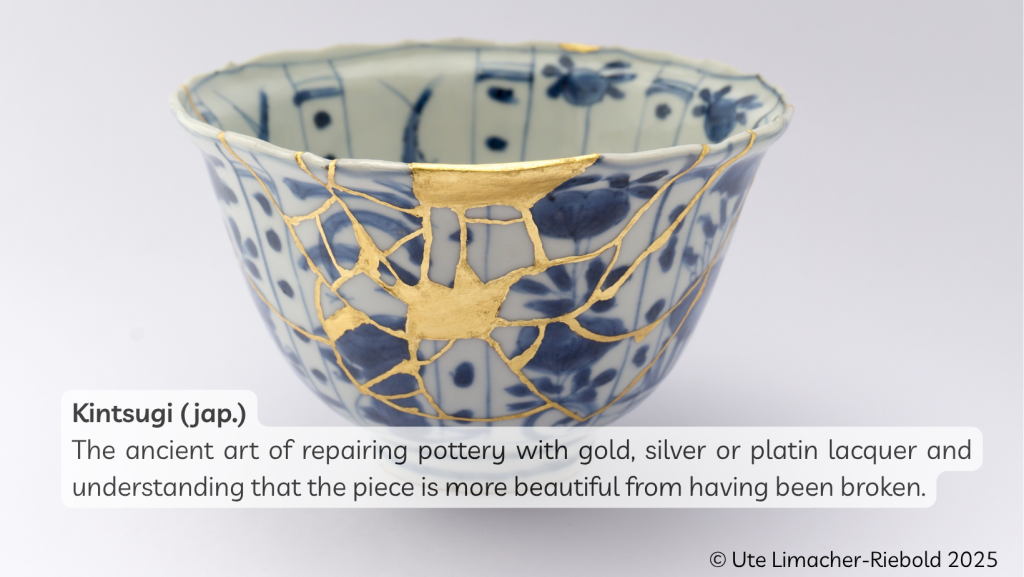
We become someone who understands, someone who can say "I have been there" and truly mean it.
Holding Space for Healing
If you are in the thick of it right now: know that you are not alone. So many of us are quietly carrying losses. Some are fresh and raw, others decades old but still deeply felt. We may not always talk about them, but they are part of us.
And thought it might not feel right now, the waves do change. And we change. Eventually, the grief that once knocked us off our feet may become a wave we can float on. A current we learn to swim with, a part of us, but not all of us.
The love we shared is not gone. It remains, carved into our being, reflected in how we love others, how we remember, how we carry their spirit forward.
In Closing
To grieve is to have loved. And to love, inevitably, means we will grieve. It is the price of deep connection. So, ride the waves. Let yourself feel them, be tossed and carried by them. And trust, slowly, at your pace, that your feet will find the sand again.
Until then, hold on. Breathe. Remember. Love.
In fond memory of my dear ones that I carry with me.
Thank you for having allowed me to be part of your life.
* I quote Bessel van der Kolk, Professor of Psychiatry at Boston University School of Medicine and President of the Trauma Research Foundation, author of "The Body Keeps The Score", from an interview.

A really expressive way of exploring this topic. Thanks for sharing Ute. We’ve experienced a large number of losses recently. Your words are kind and helpful.
I am very glad that you find it helpful. When we try to process multiple losses in a short period of time, the numbness seems never ending, and with it the sense of unfairness, maybe anger and detachment from what for others is “normal”. At least it is for me. I hope you can take all the time you need to weave your losses into your life.