
Let's Talk – Interview Series by Ute
I regularly interview experts about topics related to International Life, Raising children with multiple languages, Third Culture Kids and Intercultural Communication for my Let's Talk series on my youtube channel.
Upcoming Live Interviews
Past Interviews
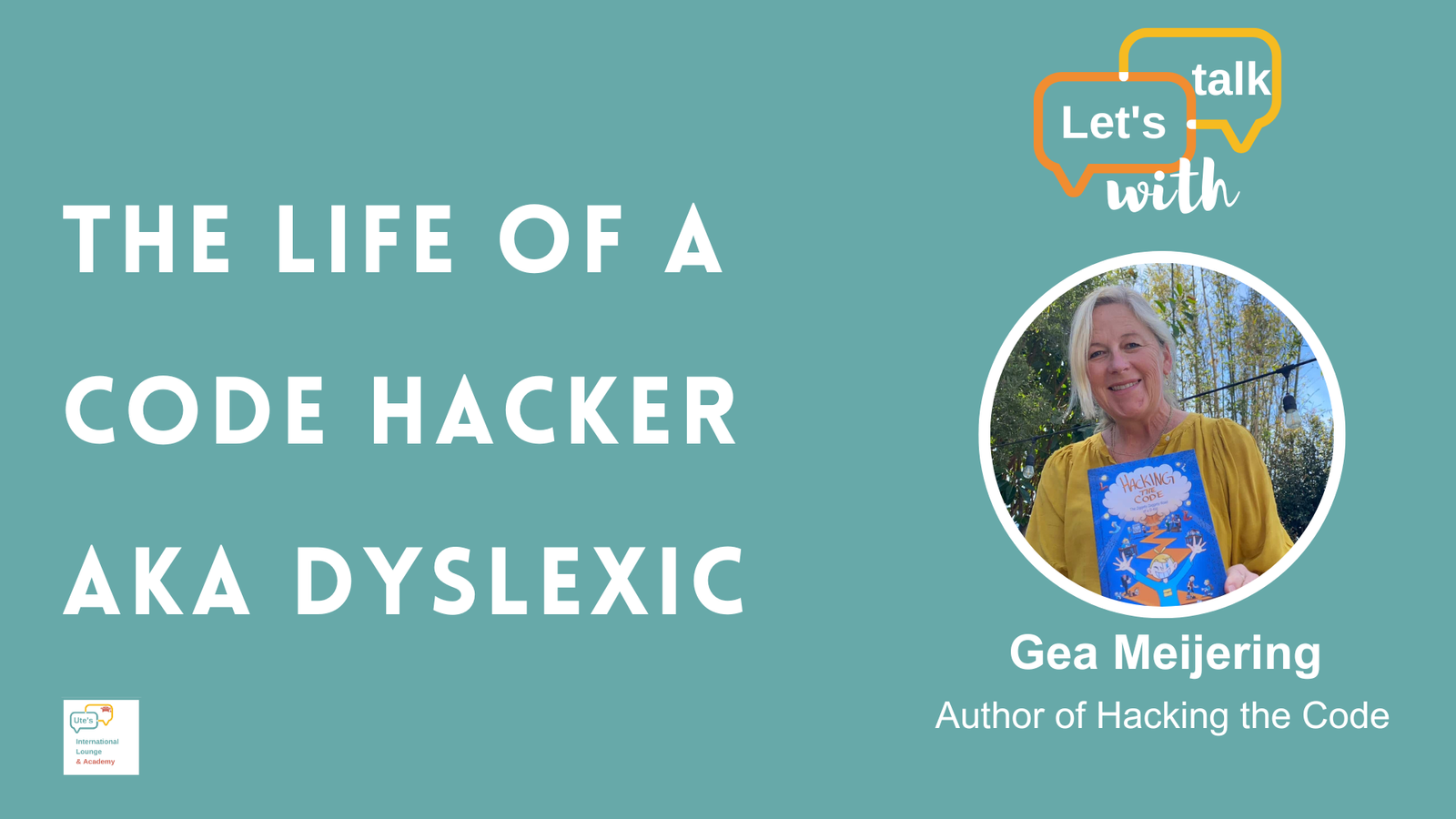
In this episode, Gea Meijering, author of Hacking the Code – The Ziggety Zaggety Road of a D-Kid talk about what it feels like being dyslexic from a children's perspective.
Gea’s book follows Kees, a bright and big-hearted boy who learns to “hack” a code that wasn’t built for him. Through his story, we see the unseen challenges, the overlooked strengths and the remarkable creativity dyslexic children (and adults!) bring to the world.
0:00 Introduction
1:45 What motivated Gea Meijering to write this book about a dyslexic boy
12:14 Misconceptions around dyslexia addressed in the book
17:40 Strengths and strategies of dyslexic children showcased in the book
24:47 The importance of adults perspectives on dyslexia – The example of Opa, Kees' grandfather, in the book
31:15 Some insights about the added pages on tests for dyslexia
36:23 Message to dyslexic children and adults supporting them
43:59 What surprised Gea the most while writing the book...
50:16 Reactions from readers so far Gea’s book offers a vivid, humorous and deeply compassionate look into the world of Kees – a bright, hands-on, big-hearted boy who navigates school and life while constantly “hacking” a code that was never designed for him. Through his eyes, we see the hidden struggles, the misunderstood strengths and the incredible creativity dyslexic children (and adults!) bring to the table.
About Gea Meijering
Gea is a passionate creative and original ideas give her a jolt of energy. A storyteller, marketeer, parent mentor and artist with a passion and a mission. As the mother of a dyslexic son, she researched dyslexia better than an FBI agent would, and witnessed the dyslexia struggle and gift it can be, upfront and personal. Gea volunteered as a parent mentor for the special education department of her local school district and is a dynamic dyslexia advocate. Over the years she saw many kids and their parents struggling to find out why school wasn't going well. Reason to write a children's book that offers kids and families the opportunity to identify with the different characters, make visible the learning struggles some students go through and bring dyslexia awareness to the community.
Book & Audiobook: https://getbook.at/PaperbackHtC | http://icarepress.com/audiobook
Facebook: https://www.facebook.com/hackingthecode
LinkedIn: https://www.linkedin.com/in/gea-meijering-nietsch-426a398/
In this Let's Talk episode, Dr. Taylor Benyahia and I talk about “The Usefulness of Languages in Multilingual Lives”.
0:00 Introduction
2:04 Let's define usefulness when it comes to languages (slide: 3:41)
7:58 How can we help parents and their children see the long-term usefulness of maintaining a heritage language that may seem irrelevant now? (slide: 18:46)
23:55 Let's talk about the risk in reducing multilingualism to utilitarian purposes like career advantages or academic performance and what needs to be done. (slide: 31:13)
39:11 What is your take on the growing focus on English as a global language in multilingual education settings?
Questions for you:
54:16 Have you ever underestimated a language's value – only to discover its importance later?
59:48 How do you balance emotional, cultural, and practical usefulness in your language choices?
Dr. Taylor Benyahia is a sociolinguist specializing in bilingual development and minority languages. For the past ten years, she has worked with schools, non-profits, and families to support bilingual children through research, hands-on school initiatives, and personalized consultations. Based in France, her work has spanned the globe, from North Africa and the Gulf to Haiti, always with a focus on empowering families and educators to support multilingualism in real-world contexts. After completing her PhD at the Sorbonne in Paris, she spent time in Kaunas, Lithuania as a post-doctoral researcher, where she studied different forms of bilingualism in local school systems as well as with recently-arrived refugees at the Red Cross. She is currently the Vice-President of Bilingues et Plus, where she leads educational and research initiatives around plurilingualism in île-de-france, and a family language consultant for families across the world.
She is especially passionate about making research accessible to parents through her Instagram and Substack, and is currently raising her own trilingual toddler using the same strategies she shares with families online.
#MultilingualFamilies #HeritageLanguages #LanguageMatters #MultilingualParenting #InterculturalCommunication #LanguageUsefulness #FamilyLanguagePolicy #Bilingualism #LanguageIdentity #LinguisticEquity #LetsTalkLanguages
In this "Let's Talk" episode we dive into the topic: "Navigating Social Media with Children – Challenges and Opportunities" with digital expert Liz Jones/ Liz Jones FCCT.
0:00 Introduction (and definition of "social media"...)
3:54 What are your thoughts about governments introducing tougher online safety measures to limit the time children spend on social media?
10:51 At what age should children begin using social media, and what key factors should guide this decision?
31:10 What are some effective strategies to help children recognize and manage online risks?
40:10 How can families establish healthy social media habits while maintaining open communication about its use and challenges?
Liz Jones is an international teacher with 30+ years of experience guiding families and children in their digital experiences. She’s an enthusiast but is very conscious of the many digital dilemmas that young people and their parents have to navigate every day. She brings experience and realistic, practical advice to support families as they take on that challenge. Liz has worked within the international setting as a teacher, senior leader and edtech coach and has a broad perspective when tackling challenges whether it be ethical, technical or educational. She’s also a wild swimmer, a forest school leader and beekeeper.
In this interview with Dr. Alessia Raineri, a linguist specialized in multilingual acquisition and dyslexia, we explore the topic: "Developmental Language Disorders (DLD) and Dyslexia in Multilingual Children". We discuss how these conditions manifest in multilingual settings, the challenges families and educators face in identifying and supporting affected children, and the opportunities that multilingualism can offer in managing these difficulties. We debunk common myths, highlight research-based strategies, and provide practical insights for parents, educators, and professionals.
0:00 Introduction
2:38 Alessia shares insights about her research
5:47 DLD and Dyslexia: how can we recognize them?
7:48 What are early signs of Dyslexia?
12:00 How we can spot if there is (maybe) a DLD
13:31 Methodologies Alessia used in her study
19:47 The important interplay between family, community and the individual person
21:27 Language choice among multilingual siblings and when language dynamics change
26:16 Some insights gained by analyzing the development of vocabulary and syntax in dyslexic children and children with DLD
29:09 An observation about Speech and Language Therapists working with multilingual children
32:50 How Language Consultants can help families whose children (might) be dyslexic or have DLD
34:25 What parents and professional should know about dyslexic children and children with DLD
35:41 What kind of support is there for parents of children with DLD or Dyslexia?
43:49 Please share your experience as parents, teachers and professionals in the comments!
Alessia Raineri PhD, is a linguist from the University of Zurich specialized in multilingual acquisition and dyslexia (The title of her Dr. thesis: Un bambino multilingue: Studio longitudinale sull’acquisizione dell’italiano, del neerlandese e del francese di un bambino dislessico a contatto con più di tre lingue dalla nascita). She is a guest professor at the Zhejiang University of Technology of Hangzhou and she is a certified teacher of Italian as Second or Foreign Language and a translator of children's books. In the last 23 years Alessia has lived in 8 countries, she and her family are still on the move but they are based in the south west of France.
In 2022 Alessia founded Multilingual Land, a consultancy company that helps parents to raise happy and confident multilingual children, and supports schools to make them thrive. Alessia is a mother of three multilingual children, aged 11, 9 and 5, growing up with French, Italian, Dutch, English and some Chinese. Her dreams are manifold. One of them is to transmit to others her inner sense of curiosity for languages and diversity. Please visit her website Multilingual Land You can find her on: IG @multilingual_land LinkedIn:  / alessia-raineri-phd-b552a33
In this enlightening conversation with Malwina Gudowska, a multilingual linguist, mother and author of "Mother Tongue Tied: On Language, Motherhood & Multilingualism - Disrupting Myths & Finding Meaning", we talk about the hidden emotional labor of multilingual child rearing, explore the powerful role of mothers in shaping language identity, and discuss the challenges of embracing linguistic diversity.
Discover how personal experiences and academic insights converge to redefine what it means to nurture true multilingualism.
0:00 Introduction
1:36 What made you choose this particular title?
4:58 How has becoming a parent reshaped your understanding of language use and identity?
7:15 Quote 1 from the book
10:51 [Question from a participant]
14:49 Can you explain how the emotional labor is overlooked when performed by mothers?
20:06 Quote 2 from the book
26:17 What are the biggest misconceptions people have about maintaining a heritage language while adapting to a dominant culture?
30:00 How can we balance embracing linguistic diversity with challenging societal bias against non standard accents?
34:40 How can parents ensure that their children feel connected to their heritage while also developing strong ties to their local environment?
39:22 [Comment from a participant]
41:28 [Question from a participant]
44:40 [Comment from a participant]
46:16 What stories or insights stood out the most in your research about families living abroad?
49:15 What are the major gaps between academic research and the lived experience of multilingual families?
55:17 [Comment from a participant]
56:26 [Comment from a participant]
57:52 [Comment from a participant]
1:00:22 Summary
Malwina Gudowska is the author of Mother Tongue Tied: On Language, Motherhood & Multilingualism – Disrupting Myths & Finding Meaning (Footnote Press, 2024). As a National Magazine Award winner, her writing has appeared in Literary Hub, Vogue, Financial Times, The Globe and Mail and in several anthologies. She is a PhD researcher in applied linguistics exploring the emotions of mothers raising multilingual children and a contributing editor for Mother Tongue magazine. Her newsletter Motherlingual, examines the intersections of language, multilingualism and motherhood. https://malwinagudowska.com
In this interview with Dr. Inga Hilbig and Prof. Eglė Kačkutė we talk about the "maternal guilt when transmitting heritage languages abroad".
Parental emotional well-being is usually overlooked, but plays a crucial role in heritage language transmission. Based on the analysis of in-depth interviews my two guests conducted for their study, we will shed some light on the importance of parental emotional wellbeing and the creation of a harmonious environment for migrant families to maintain their heritage languages and cultures.
0:00 Introduction
3:15 Can you please explain what made you focus on Lithuanian mothers in this article?
8:32 How do national constructs of motherhood shape maternal guilt among migrant mothers facing challenges in transmitting their heritage language to their children?
19:38 How great is the impact of maternal guilt on language development and the overall harmonious development of children growing up abroad?
36:30 How do overlooked emotional factors influence the success of mother’s efforts to pass on their heritage languages in migratory contexts, as highlighted in your article?
42:16 Do children who don’t speak their heritage language still belong to their culture of origin?
46:56 What should researchers, teachers, parents, professionals be aware of when considering the outcome of heritage language transmission? (With a summary)
https://www.flf.vu.lt/en/lsk/department/staff/inga-hilbig
In this interview we explore the crucial topic of supporting multilingual children with special educational needs while living abroad.
We discuss the challenges and strategies for ensuring that multilingual children with additional needs receive the support they require to thrive in diverse educational settings abroad. Join us for insights, practical advice, and a deeper understanding of inclusive practices for multilingual learners.
0:00 Introduction
2:27 What Special or Extra Educational Needs means
9:00 Early signs children will need extra support parents should know about
19:45 Early intervention is key. What if it is only available in the community language?
34:24 What can parents do when a (local or international) daycare or school turns their children down because they need extra support?
42:24 What are alternative solution for these families, if they don't want to or can't relocate to guarantee their children get the support they need?
50:51 What do you wish to change in the educational system for these international families?
Helen Claus-Willemsen is an independent educational consultant based in the Netherlands. She has over 30 years of teaching experience and specialises in assisting international families in securing inclusive school placements for children with additional needs. Her approach, “Include one – Benefit all” (at Inclusion 4 All) emphasises individualised support over labels, fostering understanding and support in classrooms to benefit all students.
Stephanie Baumgarten-Kustner is a clinical psychologist with a strong international background. She combines her expertise from clinical practice and education to support children and adolescents. With experience in the Dutch special education system and international schools, she now leads her own practice, Baumgarten Child Psychology and More, to offer tailored care for international youth.
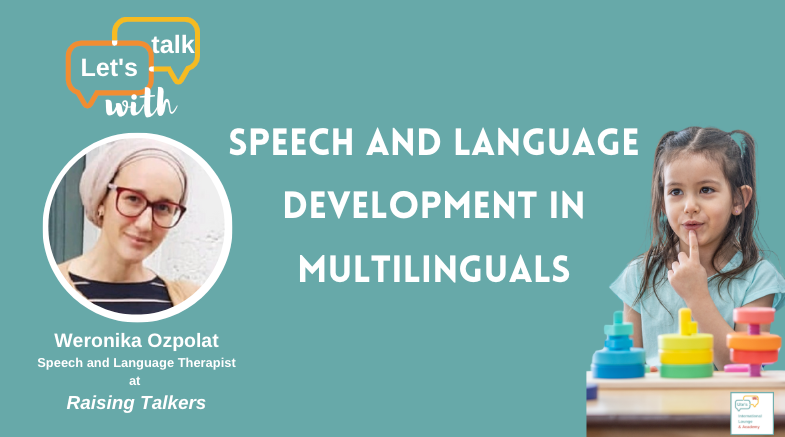
In this video we talk about Speech and Language Development in Multilinguals with Speech and Language Therapist Weronika Ozpolat. We explore the nuances of speech and language development in multilingual children and delve into the impact of multilingualism on language acquisition and communication skills. We address the phenomenon of technoference – how technology influences language interactions...
0:00 Introduction
2:10 What should parents of multilingual children know when searching support from a Speech and Language Therapist?
2:16 About one of the most persistent myths
4:10 What is the difference between Speech and Language?
5:33 Delay vs Disorders: When does a delay turn into a disorder?
6:23 Many health practitioners don't have much understanding about bilingualism
7:50 When there is an issue, it should appear in all the languages the child is acquiring/learning
10:21 Speech and Language Therapists should and can (!) asses multilingual children in all their languages; the collaboration with interpreters is very important and needs guidance
12:51 Possible causes for Language Delays
16:45 The use of technology when raising children with multiple languages and how it can affect communication and language development in the positive and negative way
21:17 Question from the followers: "At what age can language delay be observed?"
22:00 Early signs that children might struggle with language (or speech)
22:20 What are kind of "words" our children will produce/articulate at early stages
23:30 Young children need time (years) to produce the full range of sounds of a language
26:00 Overgeneralisation (and the use of "mama" and "papa"...)
27:20 Question from the followers: Do language delays or difficulties have an impact on the cognitive abilities of the child?
28:58 Technoference (technological interference) and its impact on our children's language development
31:18 Weronika's tips for parents about how to best support their children's language development
41:08 About "balanced" bilinguals...
41:44 What Weronika wishes parents, teachers and other health practitioners would know about raising children with speech and language difficulties, delays and disorders with multiple languages
52:08 Question from the followers: Is there an international milestone chart (word count per age) that is easy to understand and to look at for parents?
Weronika Ozpolat is an Independent Speech and Language Therapist at Raising Talkers specialising in bilingualism, autism and the early years, based in Bristol, UK. After graduating from De Montfort University with a degree in speech and language therapy, Weronika started a PhD at the University of Reading researching language and cognition in bilingual children with autism. Through her research she gained extra training in the areas of bilingualism and autism and is ADOS trained. Weronika worked on her PhD for 3 years but did not finish it. She hopes to go back into research in the future. Since 2014, Weronika writes for her blog, Multicultural Motherhood, about motherhood, homeschooling and speech, language and bilingualism issues. Through her blog and social media accounts, she has advised many parents with bilingual children who have speech and language difficulties. Through this advisory role, Weronika became aware of the many families who are unable to access speech and language therapy for their children and this led her to develop online speech and language courses for parents to train them to do speech and language therapy with their children at home. Information about these courses can be found on her blog www.multiculturalmotherhood.com. Weronika Ozpolat also hosts the podcast Wonder and Learn where she talks about education and child development.
Website: http://www.multiculturalmotherhood.com/
Instagram: multiculturalmotherhood
Podcast: ‘Wonder and Learn’ : https://open.spotify.com/show/70hP3aM...

When our children grow up with two or more languages simultaneously, we expect them to become verbal in both or all of them.
• What if this doesn't happen?
• What if our child only speaks the majority language?
• What are the determining factors that our children use minority languages?
• What if OPOL doesn't work?
• Is receptive bilingualism a sign of failure?
• What role play siblings when it comes to language use in multilingual families?
In this interview, Dr. Inga Hilbig answers all these questions and more.
You can read her case study on this topic here:
https://www.researchgate.net/publicat...
02:45 Introduction: what made Inga Hilbig focus on early harmonious and non/DIS-harmonious bilingualism
6:22 What the simultaneous bilingualism of Inga's son P looked like in the first 5 years
8:55 There is no "perfect" simultaneous bilingual!
10:55 Why OPOL (One Person One Language) does NOT work (or rarely does...)
16:28 Why Minority Language at Home is the better strategy!
17:33 What were the major factors that influenced your son't language choice?
19:15 Children start to be influenced by peers much earlier than you'd think!
19:42 The power of community language
22:44 Children are able to distinguish the language needs and preferences by the community from very early on and request the same use at home like in the community...
25:01 Do you think that your son didn't value Lithuanian in Germany and German in Lithuania?
27:31 About the di-lingual discourse in multilingual families
28:10 How to help your child address you in the "expected" language
32:23 Why not giving up – even if our children don't respond in the expected language! – is so important when raising children with multiple languages!
34:13 Don't underestimate the proficiency of children who don't speak the language (yet)
34:40 The power of monolingual settings on children who usually don't speak the language
36:02 How did the language use of P influence the language use of J?
39:00 The importance of children's agency when it comes to language use
42:03 About strategies to invite our children to speaking the target language
46:50 "Keeping on speaking the language nevertheless is crucial in order to keep the receptive bilingual skills in our children" 48:05 What makes receptive bilingualism a valuable asset that is worth maintaining?
50:51 Another type of receptive bilingualism (which is also valuable)
50:15 Spot the moments of small successes!
53:00 About success (in raising multilinguals)
53:56 How Inga's sons use their languages today
58:57 The age of the siblings can play a role in their language use among them
59:33 Comic books, graphic novels etc. as resource for emergent readers
1:01:00 Multilingual Family Language Constellations
1:02:00 About the Lithuanian Diaspora and parents who transmit minority languages in general
Inga Hilbig is Associate Professor at the Department of Lithuanian Studies, Institute of Applied Linguistics, Vilnius University. Her major research interests are the sociolinguistics of early bilingualism, (dis)harmonious bilingualism, family language policy, and cross-cultural communication. Her main research focus currently lies on the emotional well-being of Lithuanian migrant women in situations of disharmonious bilingualism in their inter-ethnic families. She also gives talks and seminars on children’s bilingualism for Lithuanian parents and community schools’ teachers in diaspora. She is a supporting member of Harmonious Bilingualism Network (HaBilNet/https://www.habilnet.org/) and a member of the Lithuanian Applied Linguistics Association (LITAKA/https://litaka.lt/en/). She has been involved in several national and international scientific projects (sociolinguistic and interdisciplinary) such as MOTHERNET (https://www.mothernet.eu/).
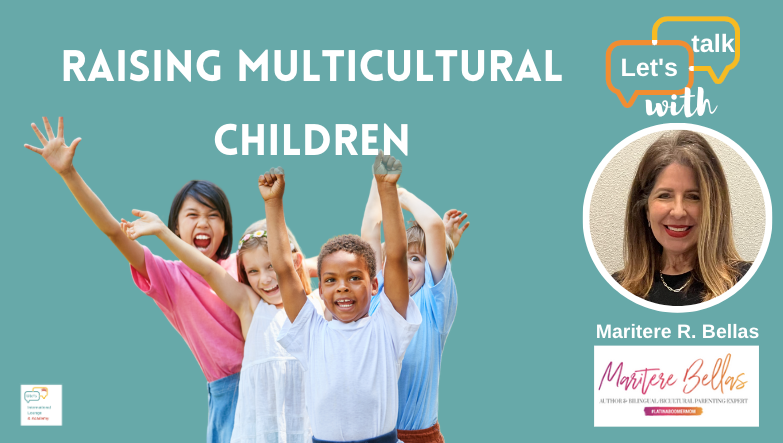
In this video, Maritere R. Bellas (@latinaboomermom) and I delve into the enriching yet complex journey of raising multicultural children. Maritere R. Bellas is an acclaimed author and expert on multicultural parenting, and brings a wealth of knowledge and personal experience to the table. She explores practical strategies, shares inspiring stories, and discusses the unique challenges and rewards of nurturing children in a multicultural environment. This interview is a must for parents, educators, and anyone interested in the rich tapestry of multilingual and multicultural family life. Gain valuable insights on how to foster effective communication, and help your children develop a strong, inclusive identity.
0:00 Introduction
2:10 About Maritere R. Bellas: her background and what made her focus on bilingualism, multilingualism and bi/multiculturalism.
5:44 The adjustment phases every immigrant, expat, refugee or any internationally living person goes through
8:55 (visual of: Cultural Change and Adaptation Curve)
10:34 What to consider when adjusting to a new culture, country, language as a family
14:33 How to cope with different parenting styles
22:50 About the "bubble" and people grieving for what they left behind...
25:22 Immigration profiles of Latino families in the US
29:27 Maritere's tips on how to balance two or more cultures
34:04 What parents with different cultural and linguistic background should agree on in order to make sure all the family cultures and languages will be welcomed and embraced by the family
43:26 Children growing up outside of the parent's culture will experience it in a different way
46:36 Parents can learn the local language with their children
53:20 About Hispanic/Latinx Heritage Month in the US
56:29 Maritere R. Bella's next projects (spoiler alert)
Maritere R. Bellas is an award-winning author, bilingual parenting expert/mentor, speaker, writer, podcast host, IG Live host, and social media influencer. She combined her passion for writing and her devotion to motherhood to create a diverse platform of resources for parents, becoming a pioneer in offering information for parents looking to raise bilingual, multilingual, and multicultural children, long before online resources were available. She is the author of four books for parents, published in English and in Spanish, and two bilingual children's books. Her third bilingual children's book is launching in 2025. Born and raised in Puerto Rico, she raised two children with two languages and three cultures. She lives with her Greek American husband in Southern California. Blog - MaritereRodriguezBellas.com Author - Arroz con Pollo & Apple Pie: Raising Bicultural Children | Luisito's Island/La Isla de Luisito | I have a secret / Tengo un secreto Featured in - HuffPost / HipLatina / Mamas Por El Mundo / Multicultural Kids Blog / Dual Language Schools Podcast - Mamás 411 Podcast
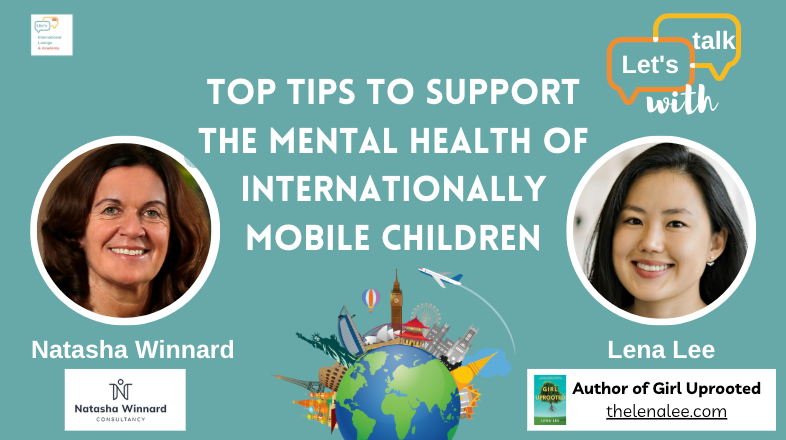
Is your family navigating the complexities of raising or educating children in a constantly changing environment? Are you wondering about the effect a childhood spent in various countries will have on your children? Together with Natasha Winnard, international youth empowerment consultant, and Lena Lee, author of Girl Uprooted, we delve into the challenges and lasting impacts of frequent relocations on children.
We share tips to support the mental health of children navigating language and curriculum transitions.
In this interview we cover topics like:
🔸 Understanding Limits: How frequent moves affect a child's sense of stability and identity.
🔸 Personal Story: Insights from moving countries every three years – new house, school, friends, language, and culture.
🔸 Mental Health: The hidden struggles - from childhood to adulthood. Early signs and lasting impacts.
🔸 Practical Tips: How to build continuity in a child's education and life amidst frequent relocations.
🔸 Parental Guidance: The importance of listening and truly understanding what your child is going through.
🔸 Educational Support: The role of educators in providing stability and understanding unique student needs.
0:00 Introduction
2:27 Children are not infinitely adaptable
5:40 TCKs (Third Culture Kids) and generally children with a mobile childhood
8:05 What you see is not everything...
17:45 How to build a sense of continuity and stability with regards to school curricula, language of education and more...
34:00 What support is there for our children to smoothly transition between one school system/curriculum and language to the other?
35:09 The importance of actively listening (and reading in between the lines...)
39:09 About support networks: where to find them, how to build them...
44:20 When parents are not able to help (i.e. listen and understand) other trusted adults maybe can
46:58 Each child is different
52:20 Mental health first aid https://mhfainternational.org
54:49 Actively seek resources!
Website mentioned during the interview: https://mhfainternational.org
Natasha Winnard is an international youth empowerment consultant fueled by a passion to support and guide young people to thrive. She has worked with amazing children, young people, families and educators for more than 25 years as an international educator, K-12 (3-18 years) comprehensive (academic, social and emotional) counsellor/pastoral care and safeguarding lead, college, university and future pathways counsellor, mentor and volunteer in schools and communities in Europe, Asia, Africa and South America. Natasha Winnard Consultancy provides holistic, personalised guidance for young people and their families looking for support in the world of international education.
Lena Lee was born in South Korea but grew up moving countries every three years. As a Third Culture Kid, she has lived in Seoul, Paris, Oslo, Kuala Lumpur and New Jersey. After studying Human Sciences at Oxford University, Lena has been working in finance. Girl Uprooted is her first book. She lives in London, a place she now calls home(ish).
Where and how you can get in contact with Natasha and Lena:
Natasha Winnard Consultancy
Telephone/WhatsApp: +55 (21) 97520 9500
Website: https://www.natashawinnard.com/
Linkedin: / natashawinnard
Instagram: @natashawinnardconsultancy
Lena Lee
Website: https://thelenalee.com/
LinkedIn: / thelenalee
Instagram: @thelenalee
